



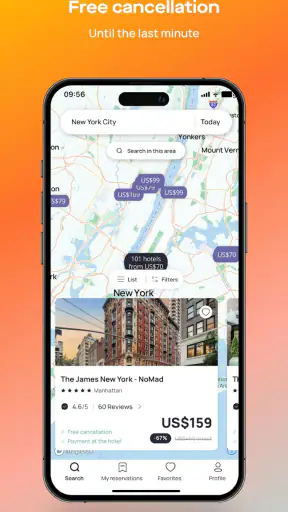
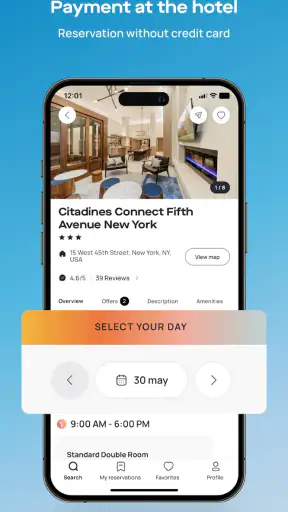
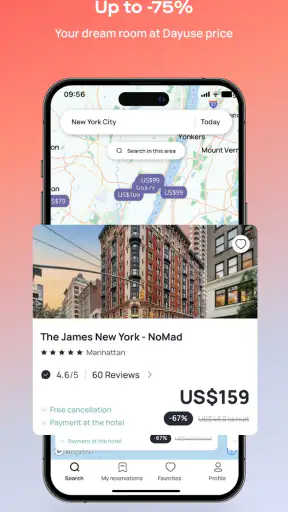
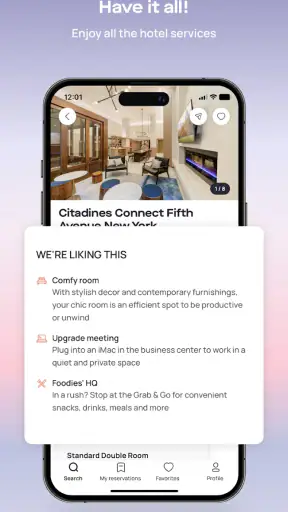

I like travel apps that solve a specific problem instead of trying to replace every part of a trip. Dayuse: Hotel rooms by day is built around one particularly useful idea: finding a hotel room for a short daytime stay. That makes it different from a standard accommodation app, where the main goal is usually an overnight booking. In my experience, this narrower purpose is exactly what makes the app interesting. It is less about planning a complete holiday and more about giving you a private, comfortable place when an ordinary waiting area, café, or airport seat is not enough.
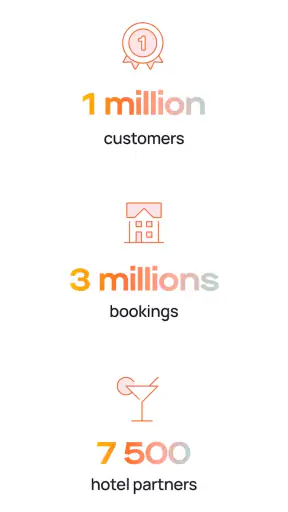
The app comes from DAYUSE and sits in the Travel & Local category. It is free to install, available to Everyone, and has been around since September 30, 2016. With a 4.9 average from around 20 thousand ratings and more than a million installs, it has clearly attracted a sizeable audience. I would not treat those figures as a guarantee that every booking will be perfect, but they do suggest that the daytime-hotel concept is easy for many travelers to understand and use.
Why a daytime hotel room can change a travel day
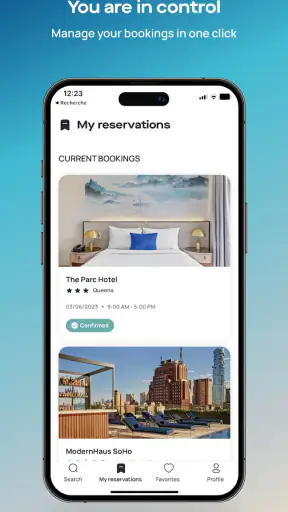
The central capability sounds simple: use the app to book a room during the day rather than committing to a conventional overnight stay. The practical difference is bigger than it first appears. A room can give you somewhere to sleep between journeys, shower before an appointment, work in privacy, store yourself away from a noisy terminal, or recover from a long night without paying for a full night that you will not use.
That focus also changes how I judge the app. I am not looking for a large collection of travel-planning tools here. I am looking at whether the app makes an awkward gap in a schedule easier to handle. On that point, its value is strongest when your timetable does not fit normal hotel check-in and check-out habits.
For example, imagine arriving in a city early in the morning while your evening accommodation is not ready. A café may be open, but it may not offer a quiet seat, a shower, luggage security, or a place to lie down. A daytime booking can turn those hours into a manageable pause. The same applies to a long connection, a delayed meeting, or a late departure after you have already checked out of an overnight stay.
The important benefit is not simply a cheaper room; it is access to a private base during an inconvenient part of the day. That distinction matters because the app is most useful when comfort, privacy, and timing are more important than staying overnight.
What the app is really replacing
In ordinary use, Dayuse competes less with another hotel app than with a collection of improvised alternatives. People often fill a few spare hours with airport lounges, coworking spaces, public cafés, shopping centers, or the lobby of a hotel. Each option can work, but each has drawbacks. A lounge may be unavailable or unsuitable for sleeping. A café expects you to keep ordering and may not welcome a long stay. A coworking space may help with work but not with a shower or a nap.
The app is therefore most compelling when you need several comforts at once. If you only want a place to sit for an hour, booking a room may be excessive. If you need to rest, freshen up, take a private call, and protect a few hours of concentration, the comparison looks very different. I found that thinking in terms of the problem being solved makes it easier to decide whether the app is appropriate.
How the booking idea works in practice
The useful workflow begins with a situation rather than a destination. Instead of asking where I will sleep tonight, I ask when I need a room and what I need it to do. That might be a morning arrival, an afternoon break, or a few quiet hours before an evening event. From there, I would use the app to look for suitable daytime availability in the relevant area and compare the options that fit the schedule.
This sounds obvious, but it is an important habit. A normal hotel search encourages you to think in nights and dates. Dayuse encourages a more precise question: what part of the day do I actually need? That makes the app particularly helpful for travelers with unusual schedules, provided they enter the search with a realistic time window rather than assuming every hotel will suit every hour.
Before confirming a booking, I would read the offer carefully and check the practical details that matter to my own plan. The room itself is only one part of the decision. Location, the usable daytime period, the amount of time needed to reach the property, and the reason for the stay all affect whether the booking will feel worthwhile. A room that looks convenient on a map may be a poor choice if reaching it turns a short rest into a stressful transfer.
My strongest tip is to plan the surrounding journey before selecting the room. If you are between two transport legs, leave enough time for the trip to the hotel and back. If you have a meeting, allow for the possibility that you will need to settle in, shower, or work before leaving. The app can help you find the room, but it cannot remove the travel time between the room and your next obligation.
A realistic day when the app makes sense
Consider a traveler who arrives in a city early, carries a suitcase, and has an evening appointment. The usual options are to remain at the station, find a café, or pay for an overnight room despite needing it only briefly. With this app, the traveler can search for a daytime hotel stay, choose an option that fits the gap, and use the room as a temporary base.
The advantage is not only the chance to lie down. The traveler can organize luggage, change clothes, take a shower, answer messages privately, and recover before going back out. Those small improvements can make the difference between arriving at the appointment exhausted and arriving prepared. I see the same logic applying to parents traveling with a tired child, remote workers needing a quiet environment, or anyone dealing with a long break between transport connections.
There is also a less obvious use: protecting energy during a demanding day. A person who has checked out of a hotel in the morning may still have several hours before a flight or train. Instead of carrying bags around and spending money repeatedly in public places, a daytime room can create one controlled pause. That is especially valuable when the day includes heat, bad weather, an early start, or a formal event later on.
Small decisions that improve the result
I would not choose solely on the most attractive-looking room. For a short daytime stay, convenience can matter more than the usual overnight priorities. A slightly less glamorous property that is easier to reach may be better than a more impressive one that sits far from the station, airport, office, or event venue. The time saved outside the room is part of the value.
I would also match the booking to the main purpose. If sleep is the priority, a quiet and practical location matters more than decorative features. If work is the priority, I would think about whether the room environment will support concentration and calls. If the goal is to prepare for an event, a reliable route and enough usable time may matter more than staying close to a tourist attraction.
Another useful approach is to treat the room as a buffer, not just a destination. A narrow booking may look sufficient on paper but leave no room for delays or a slow start. A wider daytime window can be more comfortable if the schedule is important. On the other hand, if you already know you need only a short break, paying for more time than necessary may weaken the value of the idea. The right choice depends on whether certainty or minimum cost is the bigger concern for you.
The trade-off behind the convenience
The main limitation is that a daytime hotel booking is not automatically the best bargain. The app is free, but the room itself is still a paid travel decision, and the value depends on how much you would otherwise spend on alternatives and how much comfort you need. If you only have a small gap and are happy in a public space, a hotel room may feel unnecessary.
Availability can also be more complicated than it is with a traditional overnight search. Your preferred area may not have an option that fits the exact hours you need. A room may be available, but the timing may clash with your arrival or departure. This is why I would search with some flexibility when possible, particularly if the daytime stay is connected to a flight, train, or appointment.
There is a psychological trade-off as well. Booking a room can make a travel day feel organized, but it adds another movement to the itinerary. You must reach the hotel, use the room, and then continue to the next place. For a short connection, that extra transfer may create more pressure than relief. In those cases, an airport facility, station lounge, or nearby café could be the better choice even if it offers less privacy.
I would also avoid assuming that a daytime room replaces a normal hotel booking in every situation. If you need a place for the night, want to unpack properly, or need a stable base for multiple days, an ordinary accommodation platform remains more suitable. Dayuse is strongest for a clearly defined daytime gap, not for general trip planning.
Who will benefit most
This app is a strong fit for travelers with irregular schedules. Early arrivals and late departures are the obvious examples, but business travelers can also benefit when meetings leave a long gap in the middle of the day. Remote workers may appreciate having a private place to focus while moving between cities. Couples may use a room for a quiet daytime break, while families may value the chance to rest away from crowded public spaces.
It can also help people who care about presentation and recovery. Someone attending a wedding, interview, conference, or evening celebration may not want to spend the entire day traveling in the same clothes without a private place to reset. A daytime room gives that person a practical way to prepare without paying for a full overnight stay.
The app is less suitable for budget travelers who are comfortable waiting in public areas, for people whose schedules are too uncertain to commit to a time window, and for anyone whose destination is far from participating accommodation options. It is also not the right first choice when the real need is simply luggage storage, a workspace for a very short period, or a bed for the night.
How it compares with familiar alternatives
Compared with a conventional hotel-booking app, Dayuse has a more focused purpose. Standard services are usually better when you need to compare overnight stays, build a multi-day itinerary, or manage a longer reservation. Their broader selection can be an advantage for a normal holiday. This app, however, makes more sense when the unusual timing is the starting point.
Compared with short-term rental platforms, the hotel-room approach can feel more straightforward for a brief stop. A rental may be useful for a group, a kitchen, or a longer stay, but it is often more than a traveler needs for a few daytime hours. Dayuse keeps the decision centered on temporary access to a hotel room rather than on taking over a whole apartment.
Compared with coworking spaces, the choice depends on what you need to accomplish. Coworking is usually the better fit for a workday, networking, or a professional setup. A daytime hotel is more appealing when rest, privacy, changing clothes, or personal recovery matters as much as productivity. Compared with airport lounges, it offers a different kind of comfort, but the location may be less convenient, so the transfer must be part of the calculation.
What to know before installing it
The app is free to download and has an age rating of Everyone, so it is easy to consider for ordinary travel planning. It supports devices running Android 7.0 or later, and the current version is 8.6.0. Those details make it approachable for people using an older compatible Android phone, although the quality of the experience will still depend on the device and the local availability of daytime rooms.
I would install it before the travel day rather than waiting until I am already tired in a terminal. Searching ahead gives me time to compare locations, think through transfers, and decide whether the room is genuinely better than a lounge or café. For a spontaneous delay, it can still be useful, but the less time you have, the more important it becomes to choose an option that is easy to reach.
One question many travelers have is whether the app is useful only for emergencies. I do not think so. It can be planned into a normal itinerary whenever a daytime gap is predictable. The best results come when the booking supports a specific need, such as sleep, privacy, preparation, or focused work, rather than being made simply because a room is available.
Another question is whether it is suitable for every destination. I would treat location as central to the decision. The concept is valuable only where the available hotels line up with your route and schedule. If the nearest option requires a long detour, the room may no longer save time or energy. Searching the actual area around your transport point or appointment is more useful than browsing a city in the abstract.
My final view after focusing on its main strength
Dayuse succeeds because it takes an awkward travel problem and gives it a clear shape. Instead of forcing a daytime gap into an overnight booking, it lets the traveler think in terms of hours, privacy, and recovery. That can be a meaningful improvement when you are tired, carrying luggage, preparing for an important event, or trying to work between two parts of a journey.
I would recommend it to a friend who has a long daytime break and wants more than a chair in a public place. I would not recommend it automatically for a short wait, a full night, or a multi-day trip, where other travel tools are likely to fit better. The app’s real strength is its focus, and that focus also defines its limits.
For me, the deciding test is simple: will a private room make the next part of the day noticeably easier? If the answer is yes, this Travel & Local app is worth checking before settling for an uncomfortable alternative. If the answer is no, keeping the plan simple may be wiser. That honest distinction is what makes the service useful rather than just novel.


